


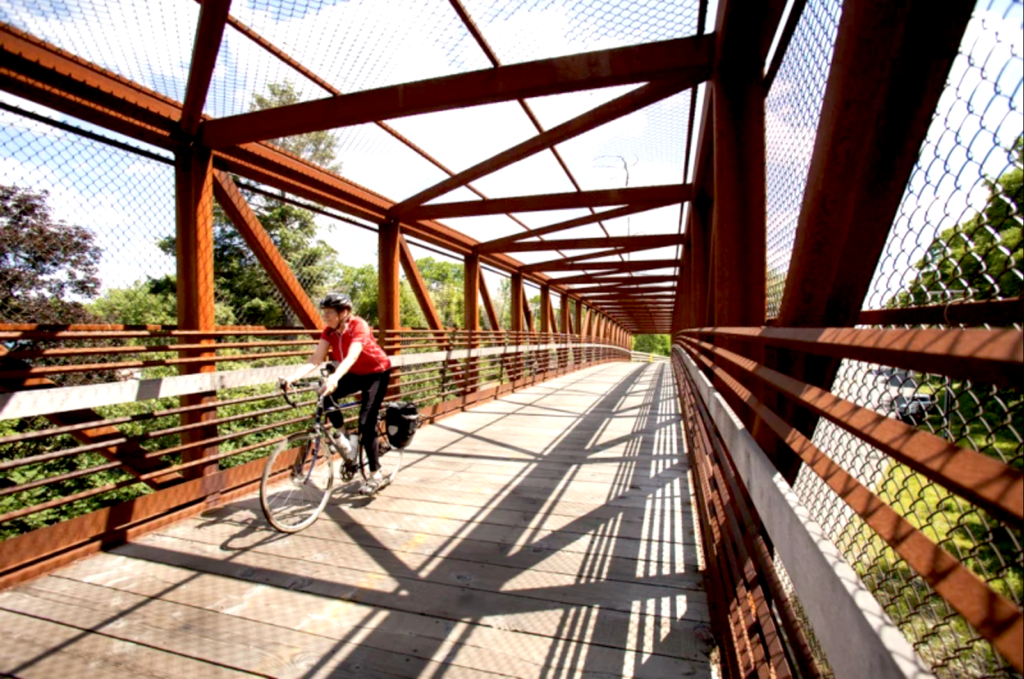
In addition to more than $350 million per year in economic activity in the form of tax revenue, income for workers, and tourism dollars for local communities, the mobility impact of a car-free transportation landscape in the communities it runs through would be huge.
“This vision is really about both transportation and recreation,” said Liz Thorstensen, vice president for trail development at Rails-to-Trails. “Even right now, this route is made up of over 120 local trails (in 12 states) that are all part of local active transportation systems, but they’re not all very well connected. By filling in the gaps, not only are you completing the Great American Rail-Trail, you’re also helping to complete these important [intracity] networks that make it easier for these regions to get to work, to school, to the grocery store, without getting in a car.”
Read the full report here.